2026-05-12

2026-05-12
Quick answer
For familiar back tightness or recurring discomfort, start by deciding whether you need general calming or deeper focused work. Massage may help some short-term muscle pain, but sharp pain, leg symptoms, numbness, or weakness should be checked before strong pressure.
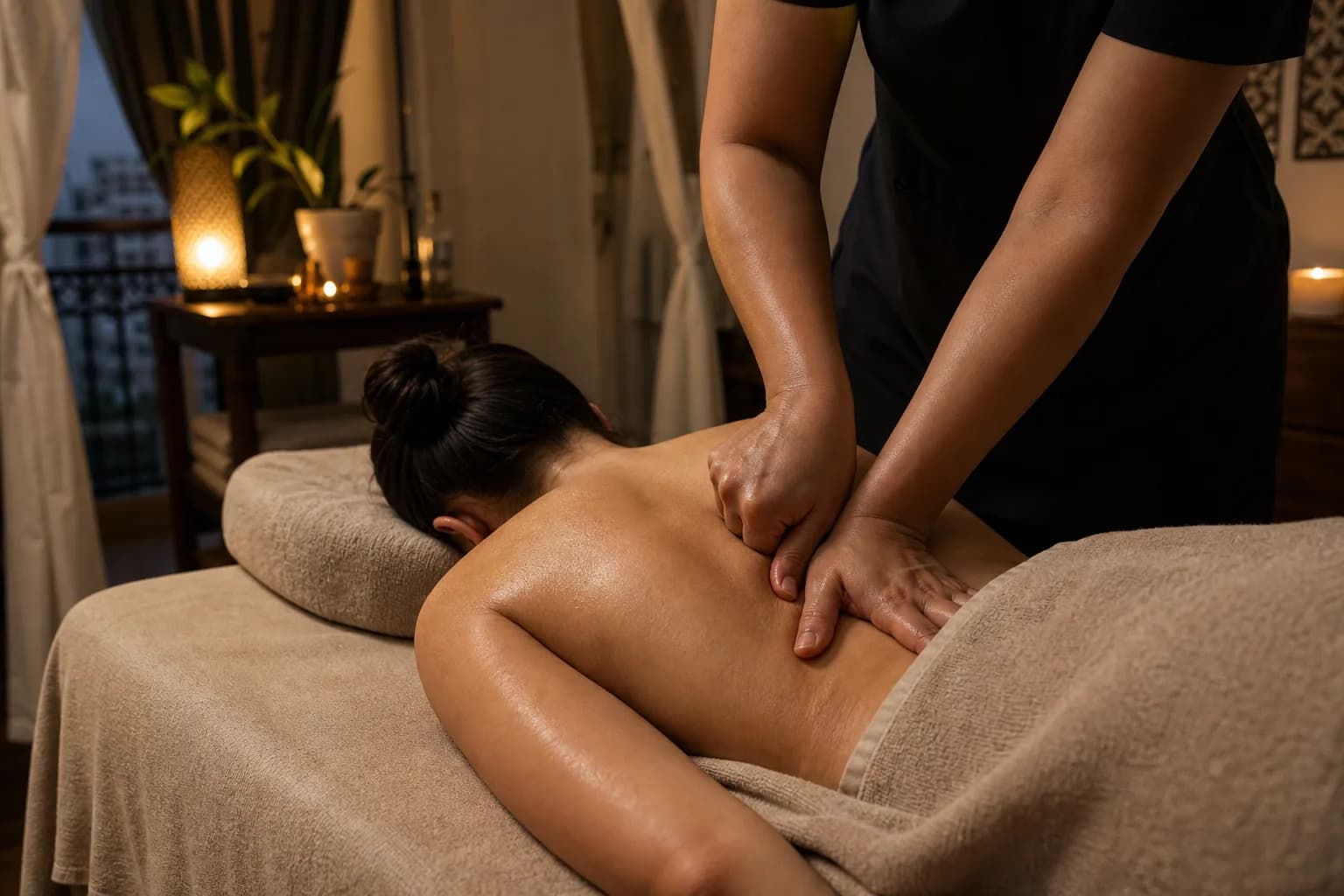
Long hours at a desk, driving, or even sleeping in an awkward position — all of this creates tension in the lower back and shoulders. A home massage addresses this tension directly without needing to travel to a spa center.
If your back pain follows intense exercise or a long workday, Deep Recovery focuses on muscle knots with stronger pressure on tired areas. Best suited for active people who train regularly.
If back pain is persistent and recurring, Deep Tissue works the deeper muscle layers with slow, controlled strokes. Best for chronic lower-back tightness or tension between the shoulder blades.
If the pain is mild and accompanied by general stress, Swedish offers broader coverage with gentler pressure that promotes relaxation without working deep into sore spots. Good as a starting point for first-time clients.
Before the session, explain exactly where the pain is, when it started, and whether it is linked to a specific activity. This helps the therapist customize the session and focus pressure on the areas that need it most.
Muscle tightness often follows long sitting, training, or carrying something heavy, and it usually sits in a clear area. Pain that travels down the leg, comes with numbness or weakness, or appears suddenly and severely should not be treated like ordinary tightness. Ask a clinician before firm work.
Before the massage starts, point to the exact area instead of saying only that your back hurts. Say whether it is lower back, between the shoulders, near the neck, or one-sided. Also mention what worsens it: sitting, driving, training, or sleep position.
No. If discomfort is mild or the whole body feels stressed, Swedish or medium pressure may be the better start. Deep Tissue fits specific recurring tightness when you tolerate stronger pressure and there are no signs that need medical review.
If the injury is recent, pain is severe, or there is swelling or bruising, postpone and ask a professional. Pressing a newly injured area may not be appropriate, and massage should not replace injury assessment.
Drink water, move gently, and avoid heavy lifting or hard exercise immediately afterward. Notice how your body responds the next day, and if pain worsens or new symptoms appear, seek advice instead of booking stronger pressure.