2026-06-07

2026-06-07
Quick answer
Lymphatic massage suits people who want very light pressure and a softer, lighter feeling, especially after travel or long standing. Do not choose it for deep muscle knots, and do not use it instead of medical assessment for sudden or severe swelling.
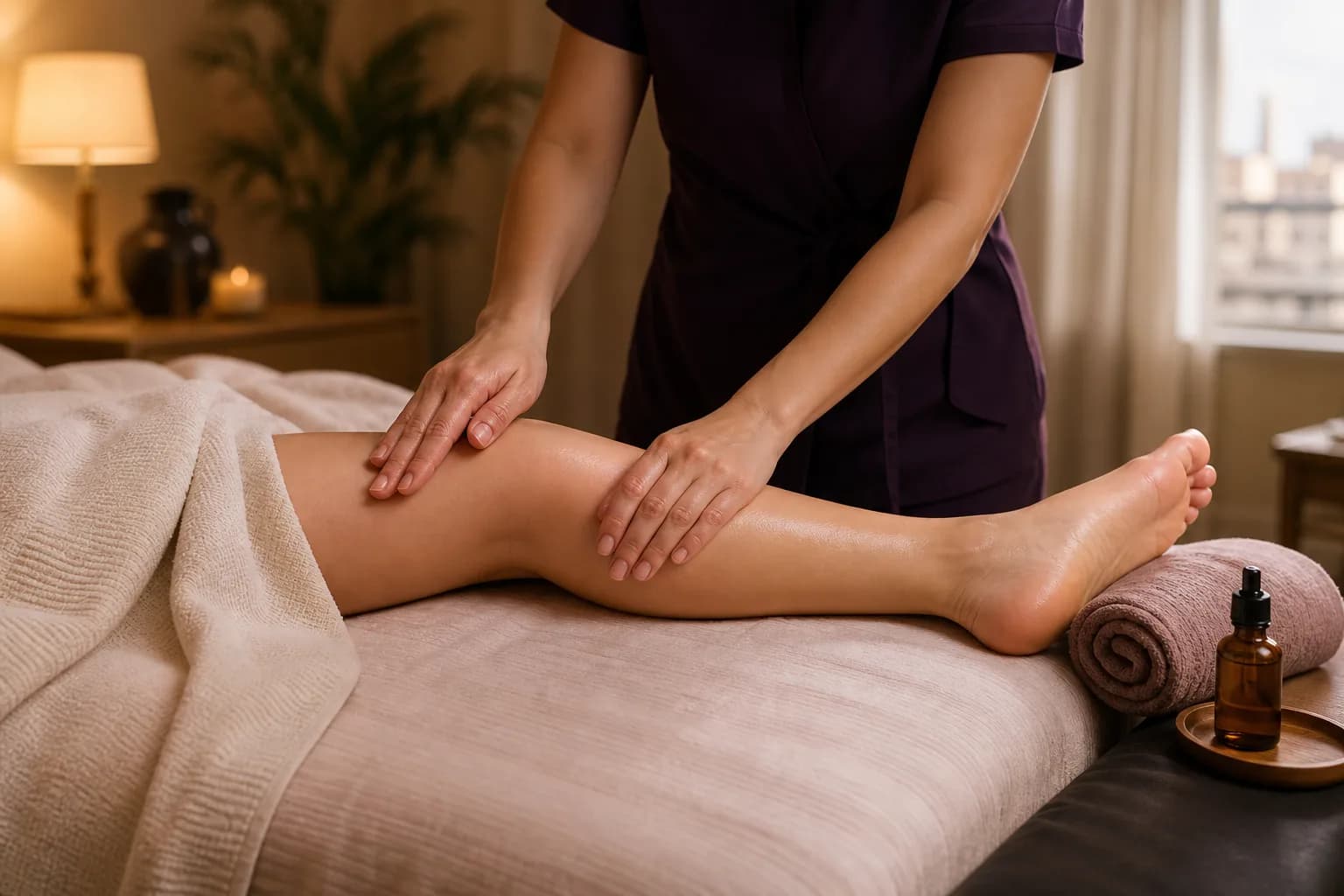
Lymphatic massage is a gentle technique built on light, steady movements in specific directions rather than firm pressure on the muscles. The goal is a lighter feeling and gentle stimulation of fluid movement, so it feels far calmer than a deep tissue or recovery session aimed at muscle knots.
Many people describe feeling relaxed and lighter after a session, especially after long periods of standing, travel, or mild fluid retention. It is important to set realistic expectations: the session helps with relaxation and a general sense of lightness, but it is not a weight-loss method or a magic cure — it is a gentle experience that calms the body.
It suits people who prefer very light pressure, who feel heaviness in the legs after a long day, or who want a calm session after a long trip. It also fits those who find strong pressure uncomfortable and want a gentle full-body style without pain or strain, leaving a quiet, settled feeling right after the session ends.
If your goal is to break up muscle knots or apply strong pressure to the back, deep tissue or recovery is a better fit. You should also check with a doctor first in cases like active infection, heart or kidney problems, a history of clots, or sudden unexplained swelling, since these need medical assessment rather than a relaxation session.
Tell the booking team your goal clearly: comfort after travel, a lighter feeling, or just gentle pressure. Drink water before and after, and choose a calm time when you can relax without rushing. If you want firmer pressure later, you can discuss combining another style in future sessions.
Many people assume useful massage must feel strong, but lymphatic work follows a different logic. Movements are light and organized, aiming for comfort and a lighter feeling rather than deep muscle layers. Judge it by that purpose, not by Deep Tissue standards.
If you have painful back knots or clear training-related muscle tightness, lymphatic massage will probably be lighter than you want. If swelling is sudden, painful, red, or clearly one-sided, ask a professional before booking a home session.
No. You may feel a temporary lightness and relaxation after the session, but lymphatic massage is not a weight-loss or fat-burning method. It is a gentle style that supports relaxation and a general sense of lightness, and it is best viewed as a comfort experience rather than a weight solution.
Lymphatic massage relies on very light pressure and gentle, steady movements, while deep tissue uses firmer pressure that reaches deeper layers to release knots. If you have clear muscle tension, deep tissue suits your goal better than a calm lymphatic session.
It depends on your goal and comfort. Some people book it only after travel or long days, while others prefer it regularly for relaxation. There is no fixed rule, and it is best to start with one session and decide on frequency based on how you feel afterward.
Usually no. It should feel very light and calm. If you feel clear pain, say so immediately because this style is not about strong pressure or testing how much the body can tolerate.
It may fit when you want gentle pressure and a lighter feeling after long sitting or standing. But severe swelling or unusual pain after travel needs medical assessment before massage.
Choose it only when your goal is light and gentle. For muscle knots or chronic tightness, Deep Tissue or Recovery is usually a better match, as long as there are no warning symptoms.