2026-05-16

2026-05-16
Quick answer
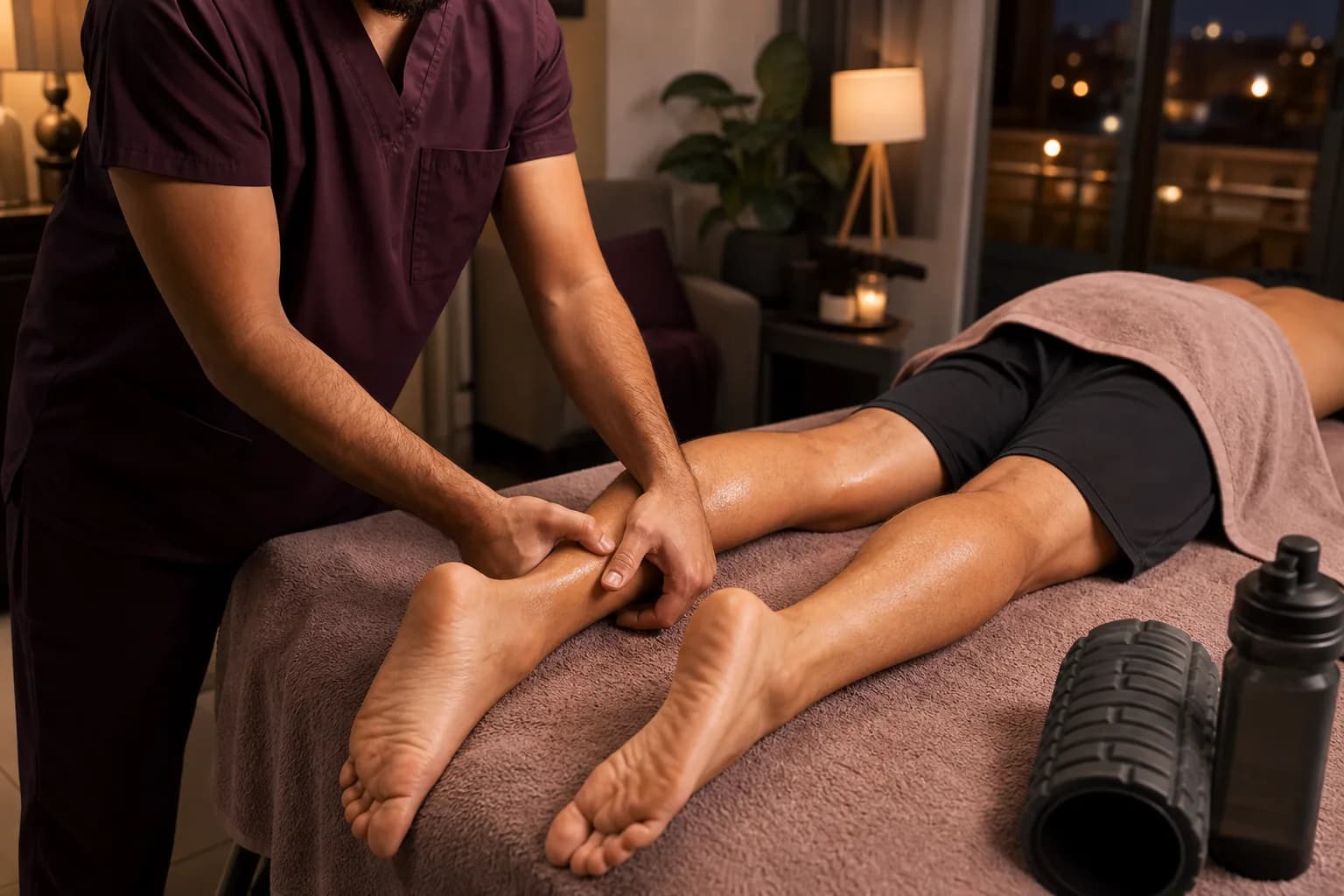
After training, book massage for familiar tightness or muscle fatigue, not for a sharp injury. Medium pressure or gradual recovery work is often better than maximum intensity, especially after a new workout or widespread soreness.
After intense exercise, you may feel fatigue, tightness, or delayed muscle soreness the next day. Some research suggests massage may reduce perceived soreness and fatigue after tough workouts, but recovery also depends on sleep, food, hydration, and how hard you trained.
If you have familiar muscle tightness or a heavy feeling after the gym, a recovery session can be useful. The goal should be calming tissue and improving comfort with movement, not forcing tired muscles to tolerate the strongest possible pressure.
Deep pressure can suit athletes who are used to it when tightness is specific and well understood. After a new workout or widespread soreness, medium pressure or Swedish massage is often better so muscles do not feel more irritated. Tell the therapist your soreness level before starting.
If pain is sharp, there is swelling or a large bruise, or you suspect an injury, do not book a strong-pressure session. Pause massage and seek professional advice when needed. Massage is not a substitute for assessing a sports injury or pain that is getting worse.
Drink water, avoid a hard workout immediately after the session, and give yourself a good night of sleep. If you train regularly, try scheduling massage on a lighter day or several hours after a hard session so your body does not feel constantly under load.
Delayed muscle soreness is often broad and follows a new or hard session. Injury may feel sharp and specific, or come with swelling, bruising, or weakness. If you are unsure, do not test the area with strong pressure. Pause or ask a professional.
If you have hard training tomorrow, a lighter calming session may suit you better than deep pressure that leaves muscles sensitive. On a rest day, or several hours after a clear physical effort, focused recovery work can make more sense.
Yes, if the goal is calming the muscles and pressure is not too intense. After a very hard or new workout, give your body a short buffer, hydrate, and avoid deep pressure if soreness is widespread.
There is no guarantee. Some research suggests massage may reduce perceived soreness or fatigue, but recovery also depends on sleep, nutrition, hydration, and training load. Use it as part of the routine, not the whole plan.
Mention the type of workout, the most tired areas, soreness level from 1 to 10, and any injury or swelling. Those details help the therapist choose useful pressure instead of treating the whole body the same way.