2026-06-09

2026-06-09
Quick answer
Book a home massage when you want real rest without the traffic and the drive, and when signs pile up — poor sleep, neck and shoulder tension, fatigue after travel or training, or a long stressful week. Only postpone if you have fever, infection, a new injury, or an unstable health condition.
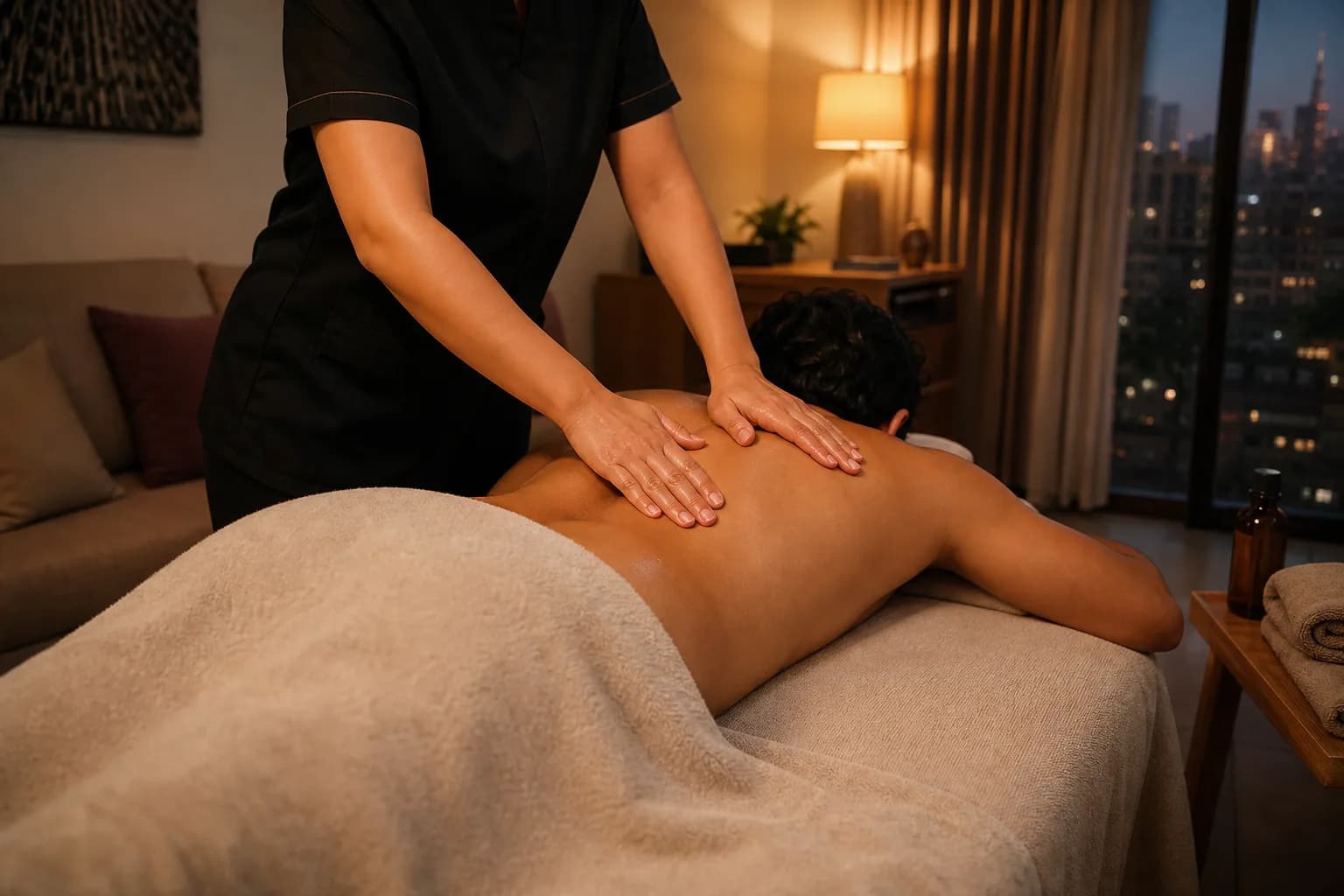
The real difference is not session quality — it is the comfort around it. At home you do not drive through traffic, hunt for parking, or leave tired right after a relaxing session. It ends and you are already where you want to be, ready to rest. The therapist brings a professional table, clean single-use sheets, and oils, so you get the same professional standard inside your own space.
Regular massage helps ease tension, improve sleep quality, support circulation, and relieve built-up muscle tightness. It does not cure everything and is not a substitute for medical care, but it is a useful tool for managing everyday stress and feeling physically better. The benefit is clearer when it is part of a steady rhythm rather than a rare event only when you are completely worn out.
There are practical signs your body needs a session: broken or unrefreshing sleep, constant neck and shoulder tension from screen time, heaviness after a long trip or long standing, tired muscles after training, or a stressful week where you took no time for yourself. Do not wait until pain is severe — booking earlier usually brings faster relief.
A home massage makes the most sense when your time is tight, when you have kids at home and do not want to go out, when you are staying in a hotel and prefer privacy, or when limited mobility makes a trip to the spa tiring. It is also reassuring for first-timers, who often feel more at ease in a familiar environment than in an unfamiliar place.
Do not use massage as a substitute for medical advice. Postpone the session if you have fever or infection, swelling or a large bruise, an acute or new injury, or an unstable health condition. In those cases a medical opinion comes first, and you can book later when the goal is familiar tension or relaxation rather than a new, severe, or unexplained symptom.
Yes — quality depends on the therapist’s skill and equipment, not the venue. The team brings a professional table, clean sheets, and oils, so you get the same standard with the added benefit of ending the session right where you are, with no tiring drive home.
It depends on your goal. For general relaxation, every two to four weeks is usually enough, while chronic tension may need closer sessions at first that you space out as you improve. Start with one session, watch how your body feels, and adjust the frequency.
No special equipment is needed. Just enough room to set up the table and move around it, soft lighting if possible, and comfortable clothing. Share access details in advance so no time is lost finding the address.